

Kaum jemand sucht einen Implantologen, weil gerade Zeit übrig ist. Meistens beginnt die Suche, wenn das Kauen auf einer Seite nicht mehr funktioniert, wenn ein Zahn schon fehlt oder wenn eine schnelle Lösung von früher nicht gehalten hat. Und sobald man in Leipzig Angebote vergleicht, lautet die eigentliche Frage nicht „Wer kann ein Implantat setzen?“, sondern: „Wer plant es so genau, dass es sich am Ende anfühlt wie ein eigener Zahn?“
Wenn Sie nach einem Zahnimplantat-Spezialisten in Leipzig suchen, wollen Sie in der Regel Unsicherheit abbauen. Wird es weh tun? Wie lange habe ich eine Lücke? Was ist, wenn zu wenig Knochen da ist? Und lässt sich das planbar erledigen, ohne endlose Terminketten?
Dieser Leitfaden ist für genau diesen Moment geschrieben. Er behandelt das, was das Ergebnis tatsächlich verändert: Diagnostik, chirurgische Planung, Risikomanagement und den Ablauf, der aus einem Implantat einen stabilen, natürlich aussehenden Zahn macht.
Was „Implantat-Spezialist“ in Leipzig wirklich bedeuten sollte
Im Alltag klingt „Spezialist“ oft nach Werbung. Fachlich sollte der Begriff etwas sehr Konkretes bedeuten: dass Implantatchirurgie, Knochenmanagement und die Planung komplexer Fälle zum täglichen Geschäft gehören – und nicht nur der unkomplizierte Einzelzahnersatz.
Ein wirklich implantologisch ausgerichtetes Zentrum bringt oralchirurgische Erfahrung mit, versteht, wie sich Zahnfleisch und Knochen über Jahre verhalten, und arbeitet mit Abläufen, die auch unter Zeitdruck gleichbleibende Qualität sichern. Das merken Sie schon im Beratungsgespräch: klare Schritte, klar benannte Risiken, klar benannte Alternativen.
Dazu gehört auch zu wissen, wann ein Implantat noch nicht gesetzt werden sollte. Eine akute Entzündung, unbehandelte Parodontitis, starkes Knirschen oder zu wenig Knochen sprechen dafür, erst die Grundlage zu schaffen. Das beste Ergebnis ist häufig das disziplinierteste – nicht das schnellste.
3D-Diagnostik: Der Unterschied zwischen „passt schon“ und präziser Planung
Implantate werden nicht nach Gefühl gesetzt. Sie werden nach Anatomie gesetzt: Nervverlauf, Kieferhöhle, Knochenvolumen und die geplante Position des späteren Zahns.
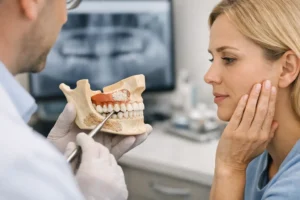
Genau dafür ist die dreidimensionale Bildgebung (DVT) da. Sie zeigt Breite und Höhe des Knochens, macht den Verlauf des Unterkiefernervs sichtbar, lässt den Boden der Kieferhöhle im Oberkiefer beurteilen und erlaubt, Länge und Durchmesser des Implantats festzulegen, statt sie zu schätzen.
Sie wird deshalb nicht routinemäßig gemacht, sondern wenn der Befund sie begründet – wie jede Röntgenaufnahme setzt sie eine rechtfertigende Indikation voraus. Bei mehreren fehlenden Zähnen, bei festen Zähnen auf Implantaten, bei einem geplanten Sinuslift oder wenn in der Nähe wichtiger Strukturen gearbeitet wird, ist sie oft der Sicherheitsabstand, der alles Weitere planbar macht.
Ein gutes Zeichen ist, wenn das Team die Planung vom fertigen Zahn her erklärt und nicht vom Implantat. Das Implantat ist das Fundament. Bewerten werden Sie den Zahn, mit dem Sie kauen.
Navigierte Chirurgie: Wenn Genauigkeit planbar wird
Bei der navigierten Implantation wird die digitale Planung über eine Bohrschablone in den Mund übertragen. Für viele Patientinnen und Patienten bedeutet das einen kontrollierteren Eingriff, in geeigneten Fällen mit weniger Gewebetrauma – und einen klareren Weg zu einer sofortigen provisorischen Versorgung.
Navigiert ist nicht in jedem Fall besser. Eine eingeschränkte Mundöffnung, ungewöhnliche anatomische Verhältnisse oder eine akute Situation können das freihändige Vorgehen sinnvoller machen. In der geplanten Implantologie unterstützt der navigierte Ablauf aber die Gleichmäßigkeit des Ergebnisses – besonders dann, wenn die endgültige Zahnposition der Maßstab ist.
Wenn Ihnen Tempo und Verlässlichkeit wichtig sind, fragen Sie, wie die Praxis diese Schritte verbindet: Scandaten, 3D-Aufnahme, digitale Planung, Umsetzung im Mund und Herstellung des Zahnersatzes.
„Feste Zähne an einem Tag“: Für wen es passt – und für wen nicht
Feste Zähne innerhalb eines Tages können viel verändern. Ein Zaubertrick sind sie nicht. Es ist ein Verfahren, das funktioniert, wenn Fallauswahl und Planung stimmen.
Die Idee ist einfach: Implantate setzen, eine feste provisorische Brücke darauf verankern, Funktion und Aussehen sofort wiederherstellen. Die Schwierigkeit steckt im Detail – in der Primärstabilität der Implantate, in der Knochenqualität, in den Kaukräften, in der Infektionskontrolle und darin, wie das Provisorium gestaltet ist, damit es die Einheilphase schützt statt sie zu stören.
Am besten passt das Verfahren, wenn mehrere Zähne fehlen oder nicht erhaltungsfähig sind und Sie eine feste Lösung wollen – und wenn Chirurgie und Zahntechnik eng zusammenarbeiten. Weniger geeignet ist es bei unbehandelter Parodontitis, bei starkem Knirschen, das sich nicht in den Griff bekommen lässt, oder bei zu wenig Knochen ohne vorbereitenden Aufbau. Mehr dazu auf unserer Seite zu festen Zähnen an einem Tag.
Eine seriöse Beratung spricht beide Szenarien an. Manchmal ist der schnellste Weg zu einem dauerhaften Ergebnis ein zweistufiger Plan. Das ist keine Verzögerung, sondern Risikominderung.
Knochenaufbau und Sinuslift: Häufiger als viele denken
„Mir wurde gesagt, ich habe zu wenig Knochen“ ist einer der häufigsten Gründe zu zögern. Der Befund ist meist richtig – und in vielen Fällen lösbar.
Knochen geht nach Zahnentfernungen zurück, ebenso bei lange fehlenden Zähnen und nach Parodontitis. Im hinteren Oberkiefer begrenzt zusätzlich die Kieferhöhle die verfügbare Höhe; dort kommt der Sinuslift ins Spiel. Wie lange die Einheilung dauert, lesen Sie im Beitrag zum Knochenaufbau bei Implantaten.
Von einem Spezialisten sollten Sie nicht nur erwarten, dass er aufbauen kann, sondern dass er die am wenigsten belastende Variante wählt, die die Langzeitstabilität trotzdem sichert. Manchmal ist das eine kleine Auffüllung im Zuge der Implantation. Manchmal ein zeitlich vorgeschalteter Aufbau. Manchmal lassen kürzere oder anders angulierte Implantate den größeren Eingriff ganz vermeiden. Jede Variante hat ihren Preis in Heilungszeit, Aufwand und Risiko.
Der richtige Plan ist der, der zu Ihrer Anatomie und zu Ihrem Zeitrahmen passt – ohne Wetteinsatz.
Angst, Schmerz, Kontrolle: Was moderne Implantologie anders macht
Die meisten Erwachsenen haben keine Angst vor Zahnärzten. Sie haben Angst vor Ungewissheit: nicht zu wissen, was passiert, wie lange es dauert und ob die Schmerzen beherrschbar bleiben.
Ein planbarer Ablauf nimmt genau diesen Stress heraus: eine klare Voruntersuchung, ein Plan, den Sie mit eigenen Worten wiederholen können, ein möglichst schonendes Vorgehen und eine realistische Nachbesprechung. Nach dem Beratungsgespräch sollten Sie wissen, was Sie in den ersten 24 Stunden erwartet, welche Schwellung normal ist, wann Sie anrufen sollten und welche Medikamente vorgesehen sind.
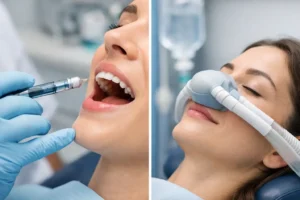
Schmerzbehandlung ist individuell. Vielen genügt eine örtliche Betäubung und ein ruhiger Umgangston. Andere brauchen je nach Angstniveau und Umfang des Eingriffs eine Sedierung oder Vollnarkose. Eine gute Praxis bespricht das ohne Wertung – und ohne Ihnen mehr zu verkaufen, als Sie brauchen.
Warum ein eigenes Dentallabor den Unterschied macht
Biologisch gelingt ein Implantat, wenn der Knochen mit ihm verwächst. Erlebt wird der Erfolg aber anders: daran, wie der Zahn aussieht, wie er sich anfühlt und wie er beim Zubeißen sitzt.
Deshalb entscheidet die Zahntechnik mit. Ein eigenes Dentallabor im Haus verkürzt die Wege, verhindert Informationsverluste zwischen Behandlung und Labor und erlaubt schnelle Korrekturen bei Biss, Farbe und Form. Bei zeitkritischen Versorgungen – einem Sofortprovisorium oder einer festen Brücke auf mehreren Implantaten – zählt das besonders.
Es ist außerdem ein Effizienzfaktor: weniger Übergaben nach außen können weniger Termine und kürzere Wartezeiten bedeuten, solange die internen Abläufe sauber organisiert sind.
Welche Fragen Sie im Ersttermin stellen sollten
Sie müssen keine Fachbegriffe lernen. Sie sollten aber Klarheit bekommen. Ein gutes Beratungsgespräch lädt zu Fragen ein und beantwortet sie in normaler Sprache.
Fragen Sie, wie die Bildgebung erfolgt und ob in Ihrem Fall eine 3D-Planung sinnvoll ist. Fragen Sie nach dem geplanten Zeitablauf – und danach, was ihn verändern könnte. Fragen Sie, wie Knochen und Zahnfleisch beurteilt werden und ob vor der Implantation eine Parodontitisbehandlung nötig ist. Wenn eine Sofortbelastung im Raum steht, fragen Sie nach den Kriterien, mit denen entschieden wird, ob das sicher ist.
Fragen Sie auch, wer was macht. In der Implantologie werden Ergebnisse besser, wenn die Zuständigkeiten klar sind: Diagnostik, Chirurgie, Zahnersatz und Labor müssen aufeinander abgestimmt sein.
Wenn Sie ausweichende Antworten bekommen oder sich gedrängt fühlen, sich sofort zu entscheiden, nehmen Sie das als Signal. Gute implantologische Versorgung kann es sich leisten, transparent zu sein.
Effizienz ohne Hektik: Was „kurze Wartezeiten“ wirklich heißt
Schnelle Termine sind gut. Schnelle Entscheidungen nicht immer.
Eine modern organisierte Praxis kann Online-Buchung, lange Öffnungszeiten und straffe Termine anbieten und trotzdem Qualität schützen – über digitale Unterlagen, intraorale Scans und standardisierte Planungsschritte.
Effiziente Behandlung fühlt sich ruhig an: Sie werden nicht gehetzt, hängen aber auch nicht monatelang in der Schleife aus „Kommen Sie noch einmal für einen Abdruck“. Digitale Abläufe reduzieren Wiederholungen und verkürzen den Weg von der Diagnose zur Behandlung.
Wenn Ihnen Ihre Zeit wichtig ist, suchen Sie eine Praxis, die organisiert genug ist, um schnell zu sein – und zurückhaltend genug, um sicher zu bleiben.
Ihr nächster Schritt in Leipzig
Wenn Ihr Ziel feste, natürlich aussehende Zähne mit einem Plan sind, dem Sie vertrauen, dann suchen Sie eine Praxis, die oralchirurgische Erfahrung, digitale Planung und einen kurzen Weg zur Zahntechnik verbindet. Diese Kombination macht aus „einem Implantat“ ein vorhersagbares Ergebnis.
Im Zahnzentrum Leipzig – Dr. Krafft MVZ ist der implantologische Ablauf um 3D-Diagnostik, navigierte Chirurgie und Zahnersatz aus dem eigenen Dentallabor herum aufgebaut. Einen Überblick über unsere Versorgung finden Sie auf der Seite Zahnimplantate in Leipzig; einen Termin können Sie online vereinbaren.
Ein Gedanke zum Mitnehmen: Die beste Entscheidung für ein Implantat entsteht selten aus dem schnellsten Versprechen. Sie entsteht, wenn ein Team Ihren Fall so klar erklärt, dass Sie ruhig Ja sagen können.
Häufige Anschlussfragen behandeln wir gesondert: Wie lange hält ein Zahnimplantat im Alltag?, Sind Schmerzen nach einem Zahnimplantat normal? und Zahnimplantat für Raucher.