
Der Begriff All-on-4 ist bekannter als das Verfahren dahinter. Gemeint ist eine festsitzende Brücke für einen ganzen Kiefer, die auf einer geringen Anzahl Implantate gesetzt wird – zwei davon meist schräg gestellt, um vorhandenen Knochen besser zu nutzen.
Das ist ein sinnvolles Konzept, aber es ist nicht die einzige Lösung und nicht für jeden die passende. Dieser Text stellt die Alternativen nebeneinander und beschreibt, wonach die Auswahl fachlich erfolgt.
Wann man überhaupt nach einer Alternative sucht
Die Frage nach Alternativen entsteht meistens aus einem dieser Gründe:
- Es wurde gesagt, dass nicht genug Knochen vorhanden ist
- Ein größerer chirurgischer Eingriff soll aus gesundheitlichen Gründen vermieden werden
- Der Aufwand liegt über dem, was gerade möglich ist
- Es besteht Unsicherheit, ob eine Brücke auf wenigen Implantaten dauerhaft trägt
- Eine Zweitmeinung soll das erste Angebot einordnen
Alle fünf sind berechtigt. Bei keinem davon ist die Antwort automatisch „dann eben nicht“.
Die wichtigsten Alternativen im Überblick
Mehr Implantate pro Kiefer
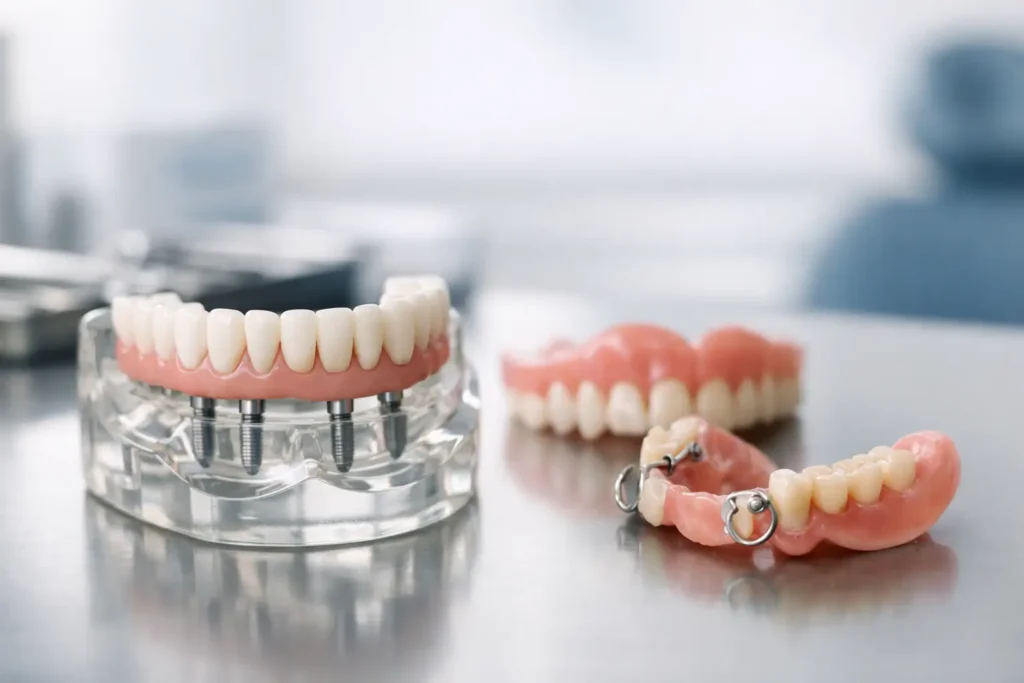
Wird die Brücke auf mehr als vier Implantate verteilt, verteilen sich auch die Kaukräfte auf mehr Pfeiler. Der Vorteil liegt in der Reserve: Geht ein Implantat verloren, ist die Konstruktion nicht zwangsläufig als Ganzes betroffen.
Voraussetzung ist, dass an mehr Stellen ausreichend Knochen vorhanden ist. Der Eingriff wird dadurch umfangreicher, nicht kleiner.
Einzelne Implantate mit mehreren kürzeren Brücken
Statt einer durchgehenden Brücke über den ganzen Kiefer werden mehrere kleinere Einheiten gebildet. Der praktische Vorteil zeigt sich bei Reparaturen: Es muss nicht die gesamte Versorgung abgenommen werden, wenn an einer Stelle etwas nachzuarbeiten ist. Auch die Reinigung ist an manchen Stellen einfacher.
Der Nachteil: Es sind mehr Implantate nötig, und die Planung wird komplexer.
Deckprothese auf Implantaten
Die Versorgung bleibt herausnehmbar, wird aber auf Implantaten verankert – über Druckknopfsysteme, einen Steg oder ähnliche Halteelemente.
Das ist in der Praxis häufiger die richtige Antwort, als es in Beratungsgesprächen vorkommt. Der Halt ist deutlich besser als bei einer rein schleimhautgetragenen Prothese, die Reinigung bleibt einfach, weil der Ersatz zum Putzen aus dem Mund kommt, und es sind weniger Implantate nötig als für eine festsitzende Brücke. Im Unterkiefer, wo der Halt am häufigsten das Problem ist, genügen dafür oft schon wenige Implantate im vorderen Bereich.
Was Sie in Kauf nehmen: Der Ersatz wird entnommen, und die Halteelemente sind Verschleißteile, die über die Jahre erneuert werden.
Konventionelle Prothese
Ohne Implantate, schleimhautgetragen. Der schnellste Weg und der ohne Eingriff – deshalb dann relevant, wenn eine Operation aus medizinischen Gründen nicht in Frage kommt.
Was dazugehört, offen gesagt: weniger Halt, besonders im Unterkiefer. Der Kieferkamm geht darunter weiter zurück, weil die Belastung auf der Schleimhaut liegt – deshalb muss die Prothese über die Jahre unterfüttert werden. Im Oberkiefer bedeckt sie den Gaumen, was Temperatur- und Geschmackswahrnehmung verändert.
Knochenaufbau und ein zweistufiger Plan
Wenn zu wenig Knochen der eigentliche Grund für die Suche nach Alternativen war, ist der Aufbau die Antwort auf das Problem selbst und nicht ein Umweg. Der Knochen wird zuerst aufgebaut, danach wird implantiert.
Das kostet Zeit und ist ein zusätzlicher Eingriff. Es öffnet aber Optionen, die vorher ausgeschlossen waren. Wie lange die Einheilung dauert, lesen Sie im Beitrag zum Knochenaufbau bei Implantaten.
Was im Alltag wirklich zählt
Bei der Auswahl wird viel über Implantatzahl gesprochen und wenig über die drei Dinge, die Sie täglich merken.
Halt. Festsitzende Versorgungen und Deckprothesen auf Implantaten liegen hier deutlich vor der rein schleimhautgetragenen Prothese – im Unterkiefer besonders klar.
Reinigung. Hier kehrt sich die Reihenfolge um. Herausnehmbarer Ersatz wird außerhalb des Mundes gereinigt, das ist einfacher. Unter einer festsitzenden Brücke muss im Mund gearbeitet werden, mit Zwischenraumbürsten und oft mit Munddusche. Wird das vernachlässigt, kann sich das Gewebe um die Implantate entzünden und im Verlauf den Knochen betreffen.
Reparierbarkeit. Was passiert, wenn nach Jahren etwas nachzuarbeiten ist? Bei kleineren Einheiten und bei herausnehmbaren Lösungen ist der Eingriff geringer als bei einer durchgehenden Brücke.
Diese drei Punkte gehören ins Beratungsgespräch – vor der Zahl der Implantate.
Aufwand und Wert
Konkrete Beträge lassen sich nur nach einer Untersuchung nennen; sie hängen von Implantatzahl, Material, Knochensituation und Aufwand ab. Was sich allgemein sagen lässt:
Bei Zahnersatz zahlt die gesetzliche Krankenversicherung einen Festzuschuss, der sich am Befund richtet, nicht an der gewählten Versorgung; ein lückenlos geführtes Bonusheft erhöht ihn. Implantate selbst sind grundsätzlich eine private Leistung, mit eng definierten Ausnahmen.
Was in Vergleichen fast immer fehlt, ist die Nachsorge: Kontrolltermine, professionelle Reinigung in passenden Abständen, bei herausnehmbaren Lösungen Unterfütterungen und der Austausch von Halteelementen. Eine Variante, die anfangs günstiger ist, kann über Jahre gleichauf liegen. Lassen Sie sich deshalb für zwei Varianten je einen schriftlichen Heil- und Kostenplan geben und fragen Sie ausdrücklich nach der Nachsorge.
Warum die Diagnostik die Auswahl entscheidet
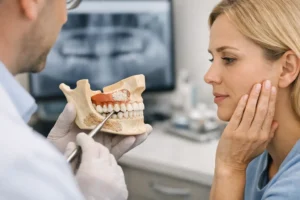
Ohne Befund ist die Frage nach der besten Alternative nicht beantwortbar. Nötig sind der klinische Befund, die Beurteilung von Zahnfleisch und Bisssituation und – wenn implantiert werden soll – eine Einschätzung von Knochenhöhe und -breite an den geplanten Stellen.
Bei mehreren Implantaten in einem Kiefer liefert eine dreidimensionale Planung die dafür nötige Genauigkeit. Sie wird nicht routinemäßig gemacht, sondern wenn der Befund sie begründet.
Der praktische Wert liegt darin, dass die Frage „reicht der Knochen?“ vorher beantwortet wird statt während des Eingriffs.
Wie „feste Zähne an einem Tag“ dazu passt
Die Sofortversorgung ist kein eigenes Konzept, sondern eine Option innerhalb der festsitzenden Varianten: Implantate setzen und am selben Tag eine feste provisorische Brücke darauf verankern.
Voraussetzung ist unter anderem, dass die Implantate ausreichend primär stabil sitzen, keine akute Entzündung vorliegt und die Bisssituation kontrollierbar ist. Bei unbehandelter Parodontitis, bei nicht beherrschbarem Knirschen oder wenn erst Knochen aufgebaut werden muss, ist der zweistufige Weg der sicherere.
Tempo ist ein Kriterium unter mehreren – nicht das erste.
Wie Sie die passende Variante finden
Ein Vorgehen, das sich bewährt hat: Lassen Sie sich zwei oder drei Varianten für Ihren Befund erklären, jeweils mit Vor- und Nachteilen, mit Zeitablauf, mit der täglichen Reinigung und mit einem eigenen Kostenplan. Fragen Sie, was in fünf und in zehn Jahren an Nachsorge zu erwarten ist. Und fragen Sie, welche Variante eine spätere Änderung offenhält.
Wenn nur eine Lösung genannt wird, fragen Sie nach dem Grund. Es kann einen guten geben – dann lässt er sich benennen.
Einen Überblick über unsere implantologischen Möglichkeiten finden Sie auf der Seite Zahnimplantate in Leipzig, zur Abwägung zwischen festen und herausnehmbaren Lösungen im Beitrag Feste Zähne oder herausnehmbar?
Dieser Beitrag dient der allgemeinen Information und ersetzt keine zahnärztliche Untersuchung oder Beratung. Welche Versorgung in Ihrem Fall geeignet ist, lässt sich nur nach einem Befund beurteilen.
Einen breiteren Überblick über die Versorgung eines zahnlosen Kiefers – über All-on-4 hinaus – gibt Guide: Fester Zahnersatz bei Zahnlosigkeit.