

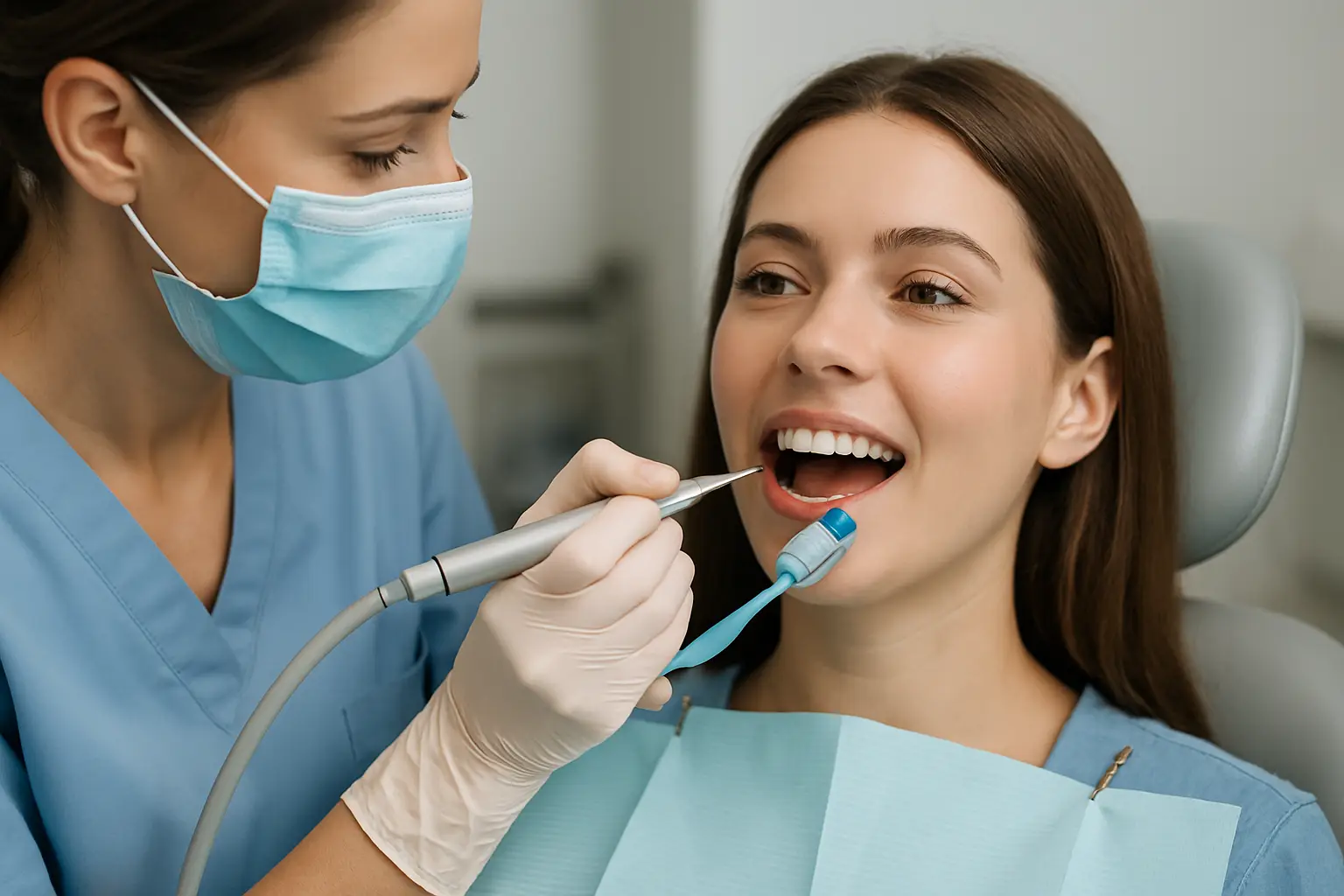
You notice it in small ways first: the coffee line that comes back faster than you remember, a rough spot behind the lower front teeth, gums that bleed “only when I floss.” That’s usually the moment people ask the same question – not because they love appointments, but because they want a plan that actually works: zahnreinigung wie oft sinnvoll?
The honest answer is not “everyone twice a year.” The right interval depends on how quickly you form plaque and tartar, how stable your gums are, and whether you have restorations like implants, crowns, or aligners. What you want is predictable prevention: fewer surprises, less invasive dentistry later, and a clean baseline for aesthetics.
Zahnreinigung wie oft sinnvoll? The interval that fits your risk
A professional dental cleaning (often called PZR in German settings) removes plaque and tartar in areas that even good brushing misses – especially around the gumline and between teeth. The frequency is “sinnvoll” when it matches your personal risk and keeps inflammation low.
For many healthy adults with stable gums and low cavity risk, an interval of every 6 months is a practical default. It’s long enough to be realistic and short enough to prevent tartar buildup from turning into chronic gum irritation.
If you tend to build tartar quickly or you’ve had gum issues before, every 3-4 months can be the difference between “maintenance” and “treating problems.” And if your mouth is very low-risk and you’re exceptionally consistent with home care, some people do well with once a year – but that should be a decision made after your exam, not a shortcut.
What matters: the goal is not a “perfectly white” feel for a few days. The goal is a stable environment where gums stay calm, pockets don’t deepen, and bacteria don’t get an easy runway.
Why people need different schedules (even with good brushing)
Two people can brush twice daily and still have very different cleaning needs. That’s because plaque isn’t only about effort – it’s about biology and access.
Some mouths mineralize plaque into tartar quickly. Once tartar is there, it cannot be brushed off at home. It creates a rough surface that makes new plaque stick even faster. That’s why frequent buildup often calls for shorter intervals.
Gum health is another driver. If gums bleed, swell, or feel tender, that’s not “normal sensitivity.” It’s usually inflammation. A professional cleaning helps reset the gumline and makes home care effective again. If you wait too long, inflammation can become a cycle: more bleeding leads to gentler brushing, which leaves more plaque, which increases bleeding.
Then there are “access” issues: crowded teeth, deep grooves, bridges, crowns, or orthodontic appliances. Even highly motivated patients can’t clean these areas perfectly every day. A smart schedule acknowledges reality and protects the investment you’ve made in your smile.
When twice a year is not enough
There are clear scenarios where 6-month cleanings may be too infrequent.
If you have a history of periodontal disease, maintenance is a different category than routine cleaning. The bacterial load returns quickly in deeper areas, and gums can relapse silently. In those cases, professional support every 3-4 months is often the safest rhythm, especially if pocket depths have been an issue.
Implants are another reason to take frequency seriously. Implants don’t get cavities, but they can develop peri-implant inflammation. That process can progress with fewer symptoms than you’d expect, and it can threaten bone stability. Regular professional maintenance around implants is less about “polish” and more about long-term security.
Dry mouth also raises risk. Many common medications reduce saliva, and saliva is your natural buffer against acids and bacteria. If your mouth feels dry, sticky, or you wake up thirsty, you may need more frequent cleanings and a more tailored home-care plan.
Lifestyle counts too. Frequent snacking, acidic drinks, and smoking all shift the bacterial balance and inflammation risk. The schedule should match what your mouth experiences most days – not what you wish it did.
When once a year may be reasonable (and when it isn’t)
Some adults genuinely have low buildup, minimal staining, and stable gums. If you have no bleeding, no tartar at checkups, low cavity risk, and excellent home care, a yearly cleaning can be reasonable.
But one yearly visit becomes risky if you already see warning signs: persistent bleeding, recurring bad breath, visible tartar behind the lower front teeth, or a history of gum therapy. Those are “don’t wait” signals.
If you want a simple rule: if you’re guessing, 6 months is safer than 12.
What a professional cleaning actually changes (beyond that smooth feeling)
A good cleaning does three practical things.
First, it removes hardened deposits that your brush and floss can’t touch. That matters because tartar is not just cosmetic – it’s a scaffold for bacteria.
Second, it reduces inflammation by cleaning along the gumline and in early pocket areas. Healthier gums bleed less, which makes daily flossing and interdental cleaning easier and more consistent.
Third, it creates a clean baseline for diagnostics and aesthetics. If you’re considering whitening, veneers, aligners, or even larger restorative work, a clean and calm gumline improves accuracy and predictability. In modern dentistry, predictability is the point.
How to tell which interval you personally need
If you want an evidence-based way to decide, look at what your mouth is telling you between cleanings.
If you feel roughness returning quickly, or your hygienist consistently finds heavy tartar despite solid brushing, you’re likely a “fast builder” and should consider 3-4 month intervals.
If your gums bleed when flossing or brushing, especially in the same areas, that’s a signal that your gumline needs more consistent professional support.
If cavities recur, particularly between teeth, the question isn’t only “more fluoride.” It’s also whether plaque is being disrupted frequently enough.
And if you have implant-supported restorations, bridges, or complex work, the interval should protect those results. Replacing dentistry is always more expensive – in time, cost, and stress – than maintaining it.
Special situations: implants, “fixed teeth,” and aesthetics
Patients investing in more advanced dentistry often ask whether cleanings still matter as much. The answer is yes – and arguably more.
With implants, the cleaning focus shifts to biofilm control around the implant and restoration edges. That often includes tailored instruments and careful techniques to protect surfaces while effectively removing deposits.
For patients with extensive restorative work or full-arch solutions, maintenance visits are also a checkpoint for bite stability, hygiene access, and early detection of wear or inflammation. The goal is to keep everything functioning quietly in the background so your “new teeth” keep feeling like yours.
Aesthetic goals benefit too. Surface stains from coffee, tea, or red wine respond well to polishing, and clean tooth surfaces make whitening results more even. If you’re planning bleaching, it’s usually smarter to clean first, then whiten on a clean baseline.
Efficiency and comfort: what to expect if you’re anxious or busy
Many adults delay cleanings for one simple reason: time. The second reason is discomfort. Both can be handled with the right workflow.
A modern practice will keep the appointment structured, explain what they’re seeing, and tailor intensity to your sensitivity. If you have anxiety, it helps when the team sets clear “stop” signals, works in predictable steps, and avoids surprises. Comfort is not a luxury add-on – it’s what allows prevention to happen regularly.
If you’re in Leipzig and want prevention organized like a system rather than a guess, Zahnzentrum Leipzig – Dr. Krafft MVZ combines structured prophylaxis with digital diagnostics and an efficiency-first appointment flow, which is especially helpful for patients who want high quality without long waiting times.
The trade-off: more frequent cleanings vs. overdoing it
More frequent cleanings can be a smart preventive choice, but they should still be justified.
If cleanings are done too aggressively, or if polishing is overused, sensitive patients can feel it. The right approach is targeted: remove what needs removing, protect enamel and restorations, and leave the mouth healthier than you found it.
Cost is also a real-life consideration, especially in US contexts where coverage varies. The practical way to think about it: frequency should reduce your long-term risk enough to be worth it. If 3-month visits prevent gum relapse or protect implant stability, they’re usually a good investment. If your mouth stays stable for 9-12 months, forcing a 3-month schedule may be unnecessary.
A simple way to decide your next interval
After your next cleaning, ask one direct question: “Based on what you see today – gums, tartar, and risk factors – what interval is sinnvoll for me?” A good answer will reference your gum condition, buildup rate, and any restorations or lifestyle factors. It shouldn’t sound like a default script.
The most helpful mindset is this: cleanings are not a reward for perfect brushing. They’re a maintenance plan for real life – and when the interval matches your risk, you spend less time dealing with problems and more time simply enjoying how your teeth feel.