

„Feste Zähne an einem Tag“ klingt nach einem einzigen Termin. Tatsächlich ist der Operationstag der sichtbare Teil eines Verfahrens, das vorher geplant und danach begleitet wird. Wer weiß, was an diesem Tag passiert und was in den Wochen danach, geht ruhiger hinein.
Dieser Text beschreibt den Ablauf – von der Voruntersuchung bis zur endgültigen Versorgung. Er nennt auch die Voraussetzungen, unter denen das Verfahren nicht geeignet ist.
Was „Sofortversorgung“ tatsächlich bedeutet
Gemeint ist: Implantate werden gesetzt und noch am selben Tag mit einer festen provisorischen Brücke versorgt. Sie verlassen die Praxis mit Zähnen, die halten, mit denen Sie sprechen können und die aussehen wie Zähne.
Wichtig ist das Wort provisorisch. Diese erste Brücke ist eine Versorgung für die Einheilphase. Sie erfüllt Funktion und Aussehen, ist aber nicht die endgültige Konstruktion. Die kommt später, wenn die Implantate im Knochen eingeheilt sind.
Was in einem Tag geschieht, ist also nicht die vollständige Behandlung, sondern der Übergang von einer Lücke zu festen Zähnen ohne wochenlange Zwischenzeit.
Für wen das Verfahren geeignet ist – und für wen nicht
Die Fallauswahl entscheidet mehr über das Ergebnis als jede Technik. Vier Punkte werden geprüft:
- Knochenqualität und -menge. Die Implantate müssen beim Setzen ausreichend fest sitzen. Diese Primärstabilität ist die Voraussetzung dafür, dass sie schon eine Brücke tragen können. Ist sie nicht gegeben, wird nicht sofort belastet – dann heilt zuerst ein.
- Akute Entzündung. Zähne können am selben Tag entfernt und Implantate gesetzt werden. Liegt aber eine akute Infektion vor, wird zurückhaltender geplant, weil Entzündung die Einheilung beeinträchtigt.
- Starkes Knirschen oder Pressen. Es schließt das Verfahren nicht aus, verändert aber die Planung: Das Provisorium wird stabiler gestaltet, die Bissführung strenger kontrolliert, häufig kommt eine Schutzschiene dazu. Lässt sich das Knirschen nicht in den Griff bekommen, ist der zweistufige Weg der sicherere.
- Notwendiger Knochenaufbau. Muss erst Knochen aufgebaut werden – etwa mit einem Sinuslift im hinteren Oberkiefer –, wird die Sofortbelastung in der Regel verschoben.
Eine unbehandelte Parodontitis wird immer zuerst therapiert. Nicht als Verzögerung, sondern weil sie sonst die Grundlage der neuen Versorgung angreift.
Vor dem Operationstag
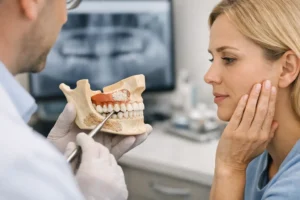
Beratung mit Blick auf das Ergebnis. Zuerst wird geklärt, was erreicht werden soll: welche Zähne ersetzt werden, wie das Ergebnis aussehen und sich anfühlen soll. Erst danach wird über Technik gesprochen.
Diagnostik und digitale Unterlagen. Klinischer Befund, Beurteilung von Zahnfleisch und Bisssituation, ein Intraoralscan. Bei mehreren Implantaten in einem Kiefer kommt eine dreidimensionale Planung dazu; sie wird nicht routinemäßig gemacht, sondern wenn der Befund sie begründet.
Planung und Kostenplan. Auf Basis der Daten wird festgelegt, wie viele Implantate gesetzt werden, an welchen Positionen und in welcher Achse. Parallel entsteht ein schriftlicher Heil- und Kostenplan, den Sie vor der Behandlung erhalten und bei Ihrer Kasse einreichen können.
Vorbereitung. Klärung der Vorerkrankungen und der Medikamente, die Sie einnehmen – insbesondere blutverdünnende Mittel und Präparate, die den Knochenstoffwechsel betreffen. Dazu die Absprache, wer Sie nach dem Eingriff abholt, und was Sie an Kost für die ersten Tage zu Hause haben sollten.
Der Operationstag
Ankommen und letzte Kontrolle. Der Plan wird noch einmal durchgesprochen, offene Fragen geklärt, die Aufklärung abgeschlossen.
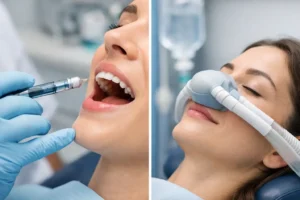
Betäubung. Der Umfang richtet sich nach Eingriff und Ihrem Bedürfnis. Vielen genügt eine örtliche Betäubung. Wer stark angespannt ist oder bei wem der Eingriff umfangreicher ausfällt, kann eine Sedierung oder Vollnarkose in Anspruch nehmen. Das wird vorher besprochen, nicht am Tag entschieden.
Zahnentfernungen, wenn nötig. Nicht erhaltungsfähige Zähne werden entfernt und die Stellen für die Implantate vorbereitet. Dabei wird so gewebeschonend wie möglich gearbeitet, weil das Knochen- und Weichgewebe für das spätere Ergebnis wichtig ist.
Implantate setzen. Wird navigiert gearbeitet, überträgt eine Bohrschablone die Planung in den Mund. Nach dem Einbringen wird geprüft, wie fest jedes Implantat sitzt – dieser Befund entscheidet, ob sofort belastet werden kann.
Provisorium befestigen. Die feste provisorische Brücke wird auf den Implantaten verankert und der Biss eingestellt. Diese Einstellung ist keine Formsache: Sie bestimmt, wie die Kräfte während der Einheilung verteilt werden.
Was Ihnen niemand seriös versprechen kann, ist eine feste Uhrzeit. Wie lange der Tag dauert, hängt von der Anzahl der Implantate, von notwendigen Entfernungen und vom Befund ab.
Die ersten Tage
Nach dem Eingriff geht es um zwei Dinge: die Wunde ruhig heilen zu lassen und die Implantate nicht zu überlasten.
Eine Schwellung ist normal und nimmt in den ersten Tagen typischerweise noch zu, bevor sie zurückgeht. Kühlen hilft in dieser Phase. Wie Sie kühlen, welche Medikamente vorgesehen sind und worauf Sie achten sollen, bekommen Sie schriftlich mit – Angaben dazu gehören in die persönliche Nachbesprechung, nicht auf eine Website.
Der wichtigste Punkt ist die Ernährung. Das Provisorium sitzt fest, aber der Knochen ist noch nicht eingeheilt. Weiche Kost in den ersten Wochen ist deshalb keine Vorsichtsmaßnahme, sondern Teil der Behandlung. Harte Krusten, Nüsse und Abbeißen mit den Frontzähnen gehören in diese Phase nicht.
Dazu kommt: kein Rauchen, keine schwere körperliche Belastung in den ersten Tagen, und Reinigung genau so, wie sie Ihnen gezeigt wurde.
Melden sollten Sie sich, wenn Schmerzen zunehmen statt abzunehmen, wenn die Schwellung nach mehreren Tagen weiter wächst, bei Fieber, bei anhaltender Blutung oder wenn sich am Provisorium etwas löst oder anders anfühlt.
Was in den Kontrollterminen überprüft wird
Die Nachsorge ist bei diesem Verfahren kein Anhang, sondern Bestandteil. Kontrolliert werden:
- die Heilung des Weichgewebes und der Zustand der Nahtstellen
- der Sitz und der Biss des Provisoriums, weil sich hier Verschiebungen zeigen können
- Anzeichen einer Entzündung am Übergang zwischen Implantat und Zahnfleisch
- Ihre Reinigungstechnik – häufig muss sie an die neue Situation angepasst werden
Termine in diesem Zeitraum wahrzunehmen ist der Teil, den Sie selbst in der Hand haben und der am meisten zum Ergebnis beiträgt.
Wann kommt die endgültige Brücke?
Erst, wenn die Implantate im Knochen eingeheilt sind. Diese Einheilung braucht in der Regel mehrere Monate; der genaue Zeitpunkt wird am Befund entschieden, nicht am Kalender.
Der Vorteil dieser Reihenfolge: In der Zwischenzeit zeigt sich, wie Sie mit der Versorgung zurechtkommen. Erkenntnisse zu Biss, Form und Farbe fließen in die endgültige Brücke ein, die im Labor gefertigt wird. Ist die Zahntechnik im Haus, sind die Wege dabei kürzer – mehr dazu auf der Seite zu unserem Dentallabor.
Die Abwägungen, die Sie kennen sollten
Zeitgewinn gegen engere Voraussetzungen. Sie bekommen sofort feste Zähne – dafür müssen mehrere Bedingungen gleichzeitig erfüllt sein. Sind sie es nicht, ist der zweistufige Weg nicht schlechter, sondern angemessener.
Ein zusätzlicher Schritt. Das Provisorium ist eine Versorgung, die später ersetzt wird. Das ist Aufwand, der beim klassischen Ablauf entfällt.
Disziplin in der Heilungsphase. Weiche Kost, sorgfältige Reinigung und eingehaltene Kontrolltermine sind bei sofortiger Belastung wichtiger als bei einer geschützt einheilenden Versorgung.
Es bleibt Biologie. Auch bei sorgfältiger Planung kann ein Implantat nicht wie erwartet einheilen. Ein seriöses Beratungsgespräch benennt, was in diesem Fall der nächste Schritt wäre.
Was Sie vor der Terminvereinbarung fragen sollten
- Nach welchen Kriterien wird entschieden, ob bei mir sofort belastet werden kann – und wann fällt diese Entscheidung?
- Was passiert, wenn sich am Operationstag zeigt, dass die Voraussetzungen nicht erfüllt sind?
- Wie viele Termine sind bis zur endgültigen Versorgung vorgesehen?
- Wer stellt das Provisorium her, und wie schnell ist eine Anpassung möglich?
- Was ist in welchem Umfang im Heil- und Kostenplan enthalten, und was kommt gegebenenfalls dazu?
Die zweite Frage ist die aufschlussreichste. Eine Praxis, die einen Plan B benennen kann, hat den Fall wirklich durchdacht.
Der Maßstab bleibt der Befund
Feste Zähne an einem Tag sind für die passenden Fälle ein sehr gutes Verfahren. Was sie nicht sind: eine Abkürzung, die für jeden funktioniert.
Ob Sie dazugehören, lässt sich nicht online klären, sondern nach einer Untersuchung. Einen Überblick über die Möglichkeiten finden Sie auf der Seite zu festen Zähnen an einem Tag, zur grundsätzlichen Abwägung im Beitrag Feste Zähne oder herausnehmbar?
Dieser Beitrag dient der allgemeinen Information und ersetzt keine zahnärztliche Untersuchung oder Beratung. Verhaltenshinweise und Medikation nach einem Eingriff erhalten Sie individuell in der Praxis.
Ergänzend: ein Überblick über verschiedene Lösungen für feste Zähne, ein Beispiel für einen kompletten implantatgetragenen Zahnaufbau und die Phasen einer Implantatbehandlung.